If I Could Help One Person — Part Thirty-Four · New
The Bloom Off the Rose
On six job interviews with no offer, being 52 and back in the job market, feeling invisible, and refusing to accept that the lines on my face are a disqualification.
© Kristen Shepherd / GenXFemHealth. All rights reserved.
If I Could Help One Person — Series
View All →I have had six job interviews. I have not received a single offer.
I want to be honest about something that does not get talked about enough in sobriety spaces, in women's wellness spaces, in any of the places where we gather to encourage each other and share our progress and say things like you've got this and keep going and your best days are ahead of you.
Sometimes the world does not cooperate with your healing.
Sometimes you do everything right — you get sober, you show up, you put on the blazer and the lipstick and you walk into the room with your résumé and your experience and your genuine, hard-won willingness to work — and the world looks back at you with a kind of polite blankness that you recognize immediately, even if you cannot name it in the moment.
I am fifty-two years old. I am back in the job market. And I am learning, interview by interview, that the world has a very specific relationship with women who look like me.
Six Interviews
Six interviews. Different industries, different companies, different interviewers. Some were warm. Some were efficient and clinical. One was conducted by a man who looked young enough to be my son, who kept glancing at his phone, who asked me where I saw myself in five years with the tone of someone who had already decided the answer did not matter.
After each one, I drove home and sat in my car for a few minutes before going inside. Not crying — at least not at first. Just sitting with the particular silence that follows a performance you are not sure landed.
I prepared. I researched. I wore the right things. I answered the questions thoughtfully. I have decades of experience, a genuine skill set, a work ethic that was forged in the kind of life that does not allow you the luxury of coasting. I know how to do things. I know how to show up.
And still: no offer. Six times, no offer.
What They See When They Look at Me
Here is what I think about in the parking lot after each interview.
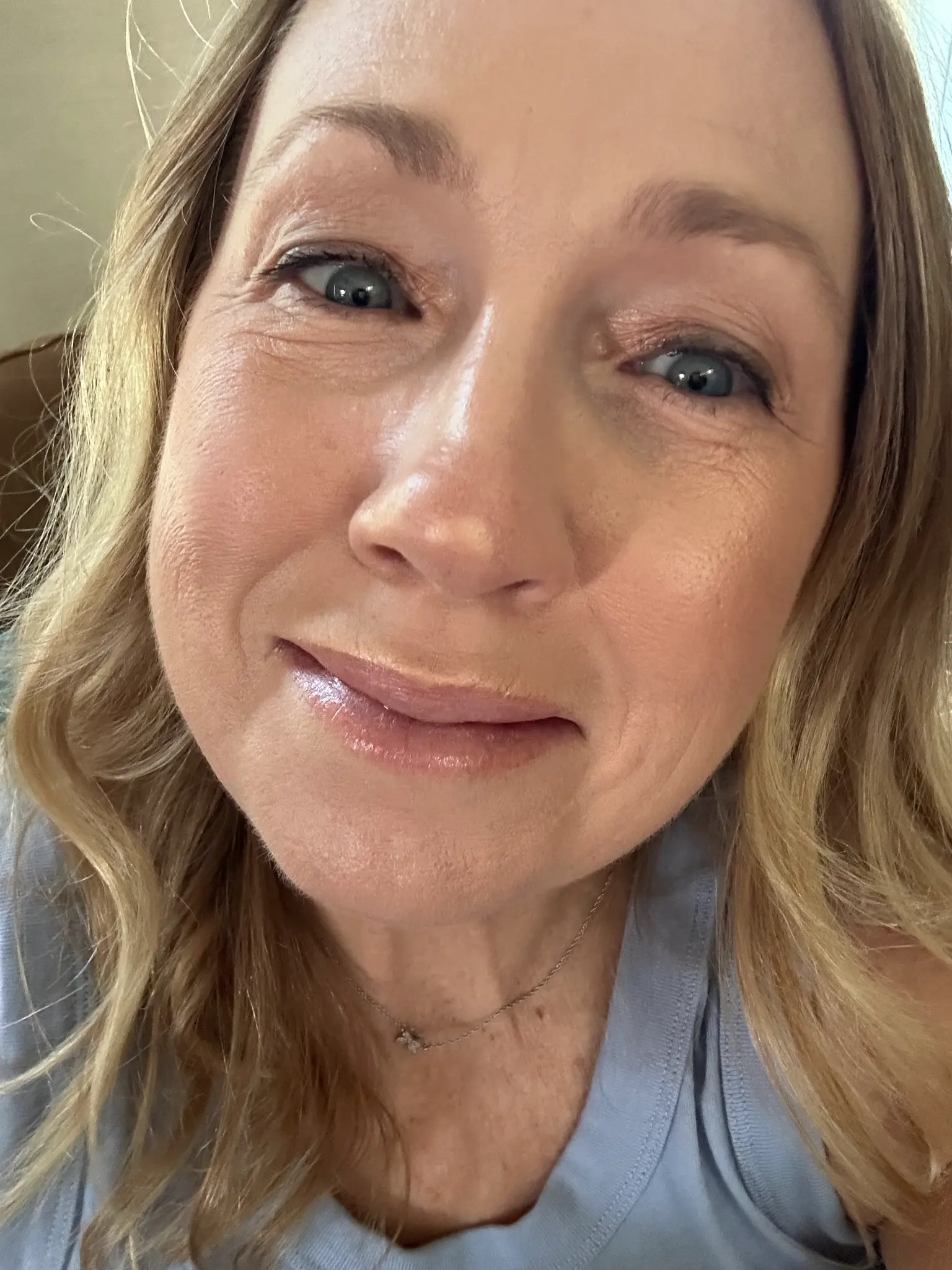
I think about the lines on my face. Not with vanity — I have made a kind of peace with my face, or I am working on it — but with a specific, practical anxiety. I think about whether the interviewer noticed them. Whether they did the math. Whether somewhere in the back of their mind, behind the professional pleasantries and the questions about my five-year plan, they were calculating my age and arriving at a number that made them hesitate.
I think about the word irrelevant. I do not say it out loud. But it is there, in the parking lot, in the quiet of the car. Am I irrelevant? Is that what this is? Have I aged out of being wanted — not just romantically, not just personally, but professionally? Is there a version of me that the market will hire, and is that version younger than I am?
These are not comfortable thoughts. They are not the thoughts of a woman who has done fifty-some days of sobriety work and is learning to be present and grateful and grounded. They are the thoughts of a woman who is scared. And I think it is important to say that — to say that the fear is real, and that it lives alongside the gratitude, and that both things can be true at the same time.
The Bloom Off the Rose
I once dated a man who told me, in the way that men sometimes tell you things they believe are observations rather than cruelties, that his ex-wife's bloom had fallen off her rose.
She was the mother of his children. She had built a life with him, raised his family, given him years. And what he remembered, what he chose to summarize her with, was that she had aged. That the thing he had valued in her — her youth, her freshness, the particular quality of a woman before time has touched her — was gone. And so, in some essential way, was she.
I remember the way he said it. Casually. As if it were simply a fact about the world, like the weather or the price of gas. Her bloom had fallen off her rose. As if a woman's worth were a flower's, measured entirely by how long she could hold her color before the petals began to drop.
I did not say what I was thinking. I was younger then, and I had not yet learned to say the things I was thinking. But I am saying it now:
"What he was describing was not a loss of beauty. It was a loss of use."
She had served her purpose — she had been young and lovely and had given him children — and now she was something else, something he had no category for, something he could only describe as an absence. The absence of what she used to be.
I think about that man when I sit in the parking lot after my interviews. I think about the way the world has always had a version of that story for women. Not always said out loud. Not always conscious. But present, in the glance that lingers a half-second too long on the lines around your eyes. In the question about where you see yourself in five years, asked by someone who has already decided the answer does not matter. In the silence that follows six interviews and zero offers.
Her bloom had fallen off her rose.
Is that what they see? Is that the story they are telling themselves about me?
What the Research Says (And What It Cannot Fix)
Age discrimination in hiring is illegal. It is also pervasive, well-documented, and extraordinarily difficult to prove.
Studies consistently show that older workers — particularly women — face significant disadvantages in the job market that have nothing to do with their qualifications. A 2020 study published in the Journal of Applied Psychology found that résumés with indicators of older age received fewer callbacks than identical résumés without those indicators, even when the older candidates had more experience. The effect was stronger for women than for men.
Research from the Urban Institute found that more than half of workers over fifty are pushed out of long-held jobs before they are ready to retire, and that the majority of them never recover their previous earnings level. The financial consequences are severe and lasting.
And a landmark study by economists at the Federal Reserve Bank of San Francisco sent out thousands of fake résumés to real job postings and found that callback rates for older women were significantly lower than for younger women — lower, in fact, than for older men. The intersection of age and gender creates a particular kind of invisibility that neither category produces alone.
I know all of this. I have read the research. I understand the systemic dimensions of what I am experiencing. And I want to be honest: knowing the research does not make it easier to sit in the parking lot. Knowledge is not the same thing as comfort. Understanding the mechanism of a wound does not stop it from hurting.
The Question I Keep Asking
Does anyone want to hire an old woman?
I ask this not with self-pity — or not only with self-pity — but with genuine uncertainty. I do not know the answer. I do not know if the next interview will be different, or if there will be a seventh and an eighth and a ninth, each one ending in the same polite silence.
What I know is this: I am not done. I am not willing to accept the premise that my value ended somewhere around forty-five, that the best I can offer the world is behind me, that the lines on my face are a disqualification rather than a credential.
I have lived through things that younger candidates have not lived through. I have made mistakes and learned from them in ways that cannot be taught in a classroom or simulated in a training program. I have been broken and rebuilt. I have sat in parking lots after hard things and then gone inside and made dinner and gotten up the next morning and tried again.
That is not nothing. That is, in fact, quite a lot.
What I Am Not Willing to Believe
I am not willing to believe that the man who described his ex-wife's bloom falling off her rose was right about women. I am not willing to believe that we are flowers, valuable only in our opening, disposable in our fullness.
I am not willing to believe that fifty-two is a sentence. That the lines on my face — earned, every one of them, through a life that was not always easy and was always, always lived — are something to apologize for.
I am not willing to believe that the interviewers who passed on me were seeing clearly. I think they were seeing through a lens that has been handed to them by a culture that has always had a complicated relationship with women who are no longer young. A culture that calls it bloom falling off the rose and thinks it is being poetic when it is actually being cruel.
I am still here. I am sober, which means I am clearer-headed than I have been in years. I am more myself than I have ever been — not less, not diminished, not past my season. More.
"I am going to keep interviewing. Not because I am not scared. But because the alternative — accepting the premise that I am done — is not something I am willing to do."
Not now. Not after everything it took to get here.
A Note to Anyone Who Recognizes This
If you are in this parking lot with me — if you are fifty-something and back in the job market and sitting with the particular fear of being seen as past your prime — I want you to know that you are not alone, and you are not wrong to be scared, and the fear does not mean the fear is right.
The research is real. The discrimination is real. The way the world looks at older women is real, and it is not fair, and it is worth being angry about.
And also: you are not a flower. You are not measured by your bloom. You are a person with a history and a skill set and a future, and the fact that some interviewer in some office somewhere did not see that is a failure of their vision, not a fact about your worth.
Keep going. I am.
Journaling Prompt
Have you ever been made to feel that your value was tied to your youth or appearance — in a relationship, a workplace, or a social setting? What was that message, and where did it come from?
Resources
Know Your Rights
AARP Job Board & Career Resources: aarp.org/work
Report Age Discrimination (EEOC): eeoc.gov
Continue the Series
This is Part Thirty-Four of an ongoing series. If you are new here, you can start at Part One or read the previous installment, Part Thirty-Three.
View the Full Series →Coming Next
If I Could Help One Person — Part Thirty-Five
Kristen's story continues. Subscribe to the newsletter to be the first to know when Part Thirty-Five is published.
Subscribe for updates →Join the Conversation
Be the first to share your thoughts