Florida Keys · The Southernmost Point
KEY WEST
Sun, Sea & Southern Charm
There is a reason people fall in love with Key West and never quite leave — not even in their hearts.
Perched at the very tip of the Florida Keys, just 90 miles from Cuba, Key West is the United States at its most tropical, most colorful, and most unapologetically itself. The streets are lined with bougainvillea. The sunsets are legendary. The roosters roam free. And tucked between the pastel-painted houses and the salt-tinged sea breeze, you will find some of the most unexpectedly magical experiences in the country — including one that stops you in your tracks the moment you step through the door.
Key West rewards slow travel. It is a place to wander without a plan, to eat well, to sit with a drink and watch the sky turn pink and gold over the Gulf. But it is also a place with genuine depth — history, wildlife, art, and a spirit of freedom that has drawn writers, artists, and wanderers for generations. Whether you are here for a long weekend or a full week, you will leave with more than a tan. You will leave with a story.
We are just getting started with this guide. More sections are on the way — but we begin where any nature lover should: with butterflies.
Key West Butterfly & Nature Conservatory
Nothing quite prepares you for the moment you walk through the double doors of the Key West Butterfly & Nature Conservatory on Duval Street. One step inside and you are surrounded — hundreds of live butterflies from around the world drifting through a lush, climate-controlled tropical garden, landing on flowers, on leaves, and occasionally on you. It is one of those rare experiences that is genuinely as magical as it sounds.
The conservatory houses more than 50 species of butterflies at any given time, along with exotic birds, cascading waterfalls, and over 2,000 tropical plants. The air is warm and fragrant. The light filters through the glass dome in long golden shafts. It is, without exaggeration, one of the most beautiful enclosed spaces in Florida.
Plan to spend at least an hour here — longer if you love photography. The butterflies are remarkably unhurried, and if you stand still long enough, they will find you. Wear something colorful and floral if you want to make new friends. The conservatory is open daily and is located at 1316 Duval Street — right in the heart of the action, making it an easy stop on any Key West itinerary.
Good to Know
Through My Lens
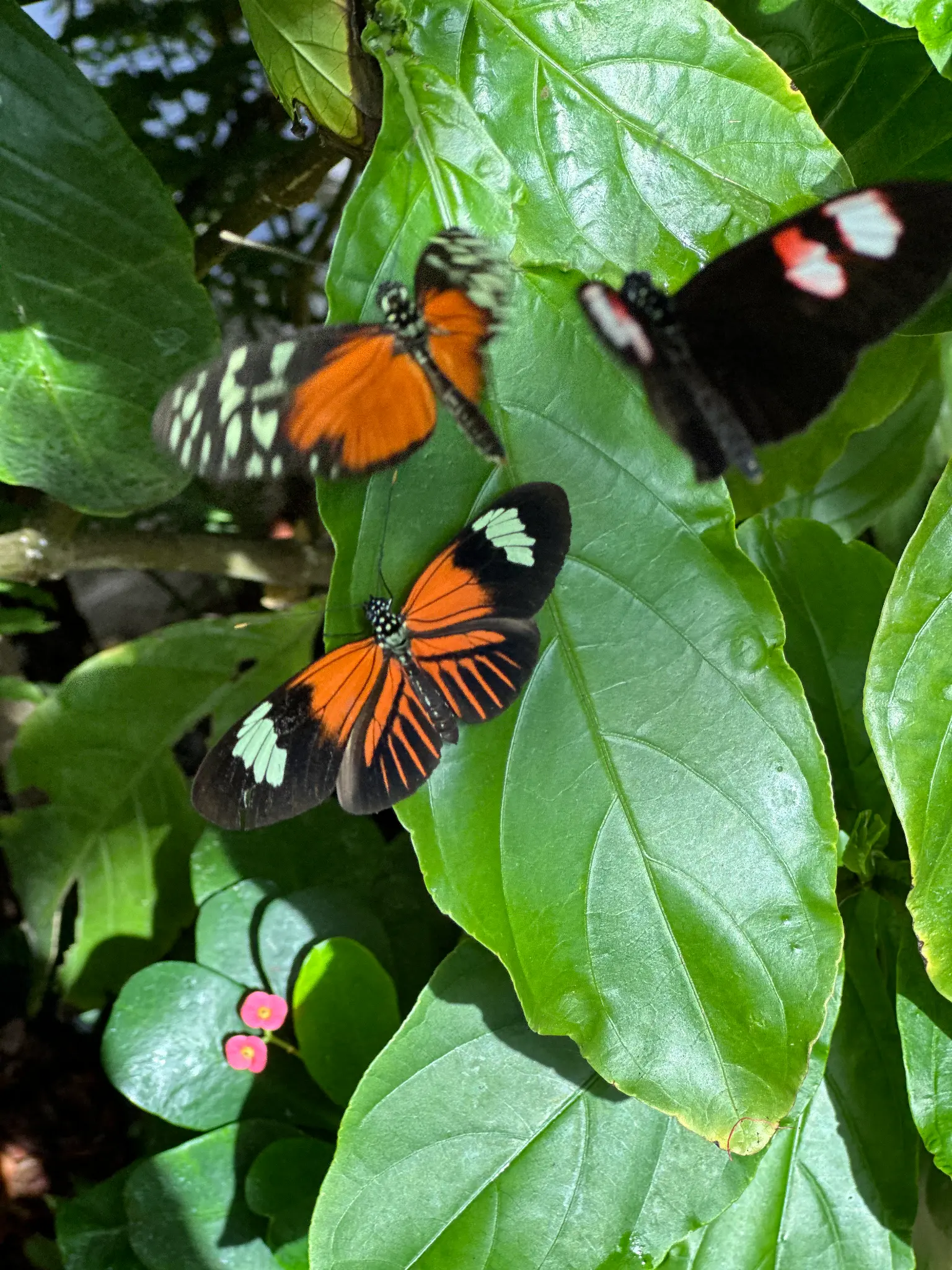
Doris Longwing (Heliconius doris) — three at once, resting on tropical leaves
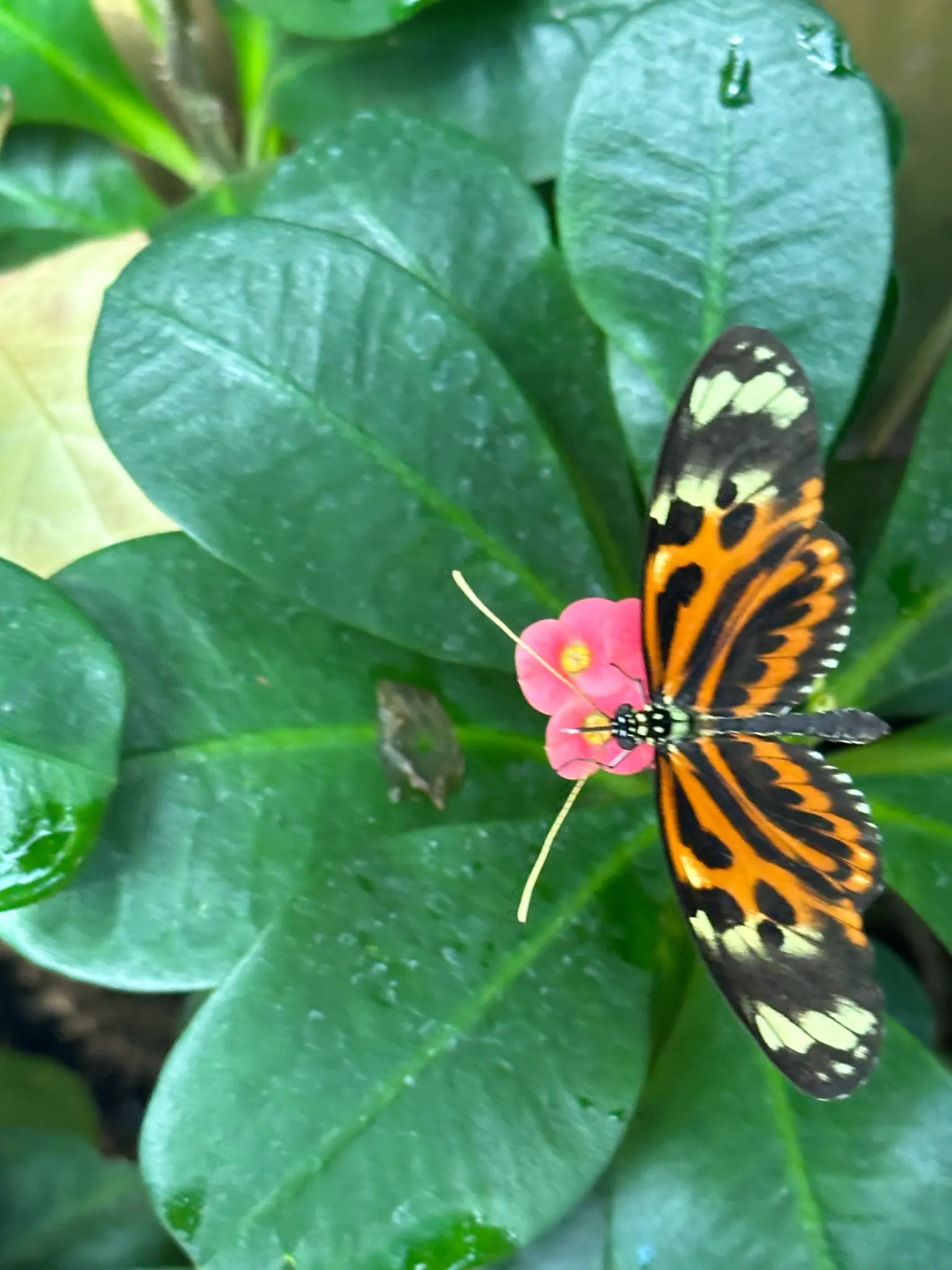
Tiger Longwing (Heliconius hecale) — feeding on a pink bloom
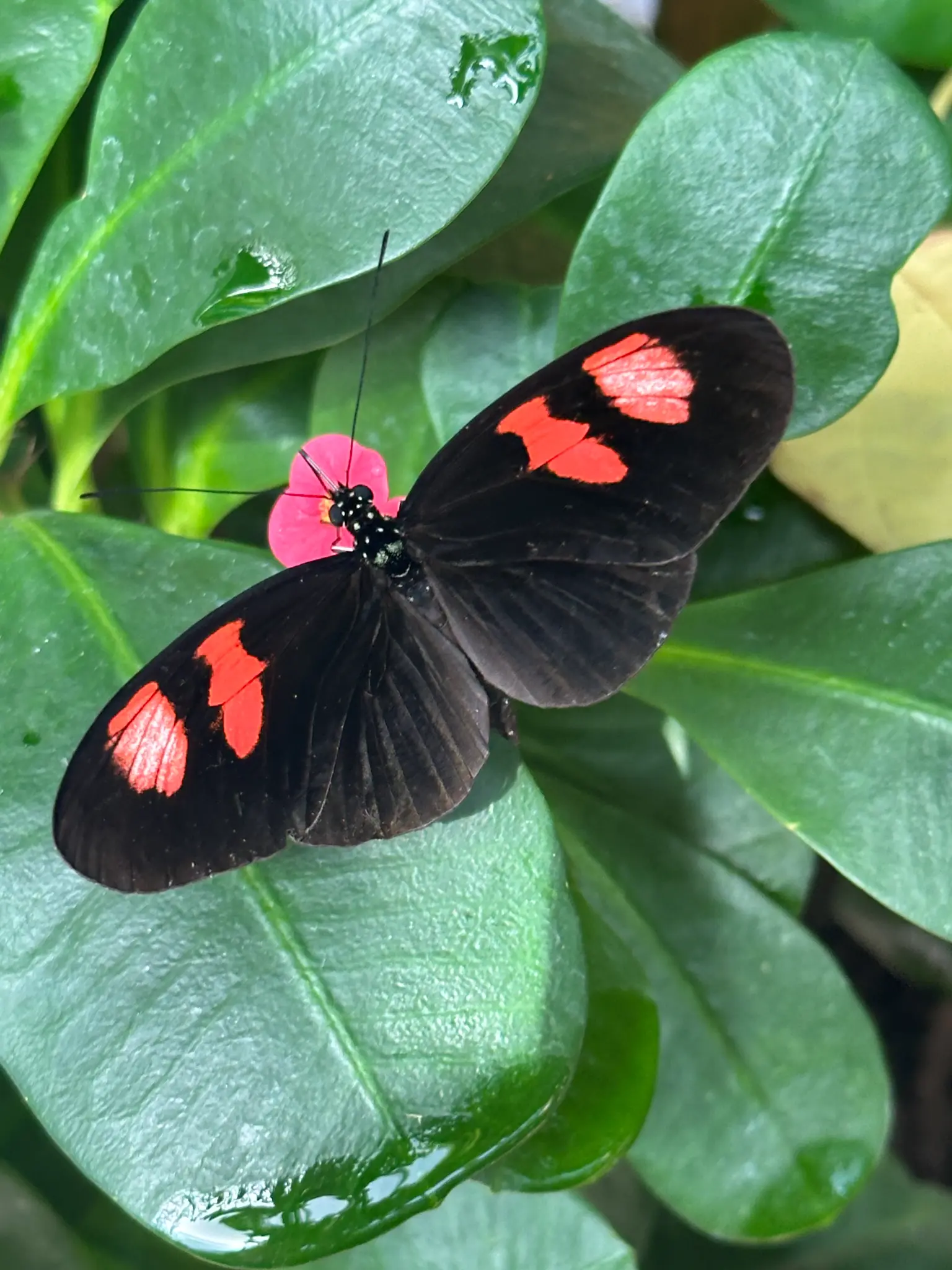
Postman Butterfly (Heliconius melpomene) — deep black wings with vivid red patches
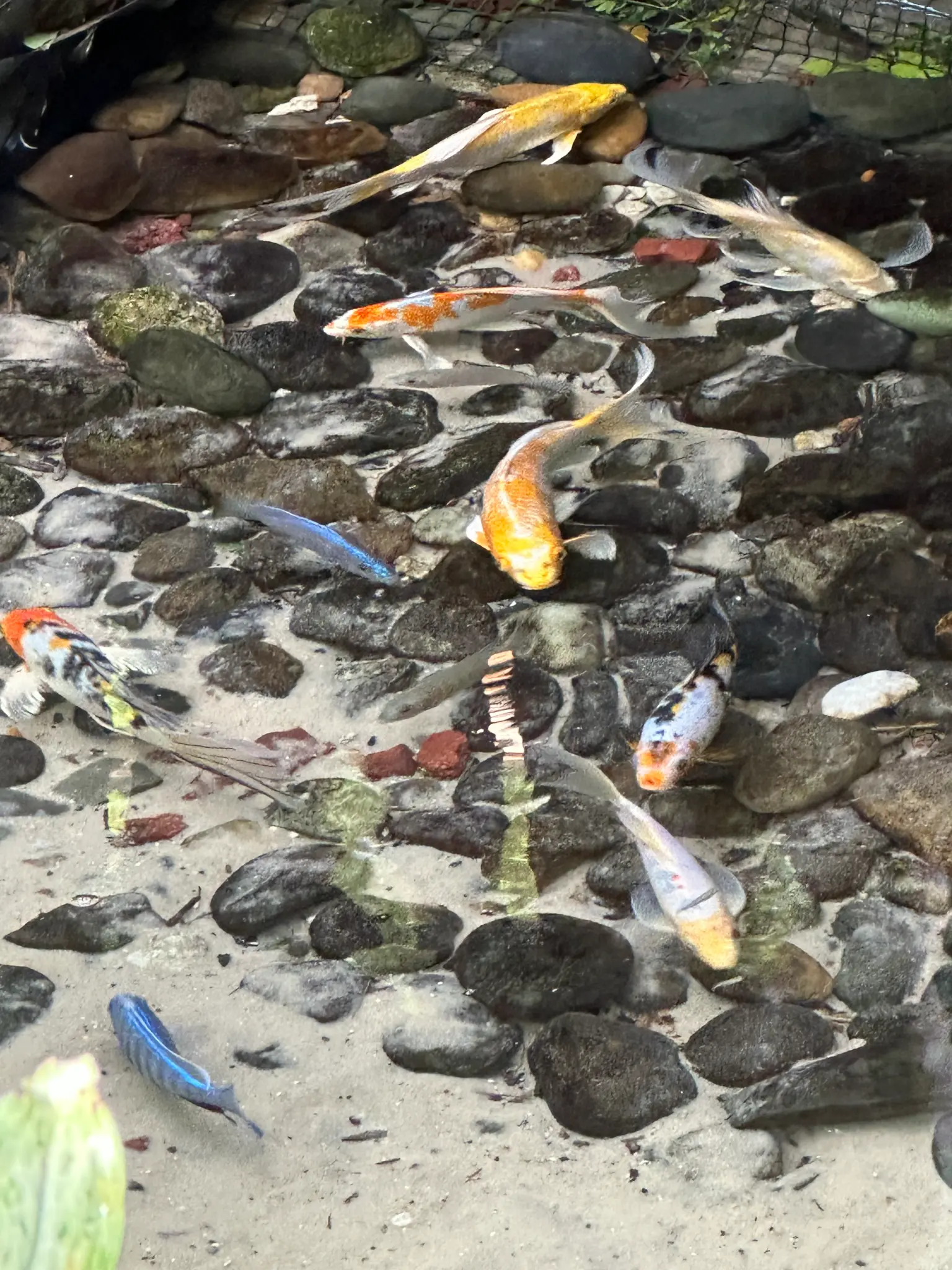
Koi and electric blue fish in the conservatory's shallow stream — the water garden is as enchanting as the butterflies above
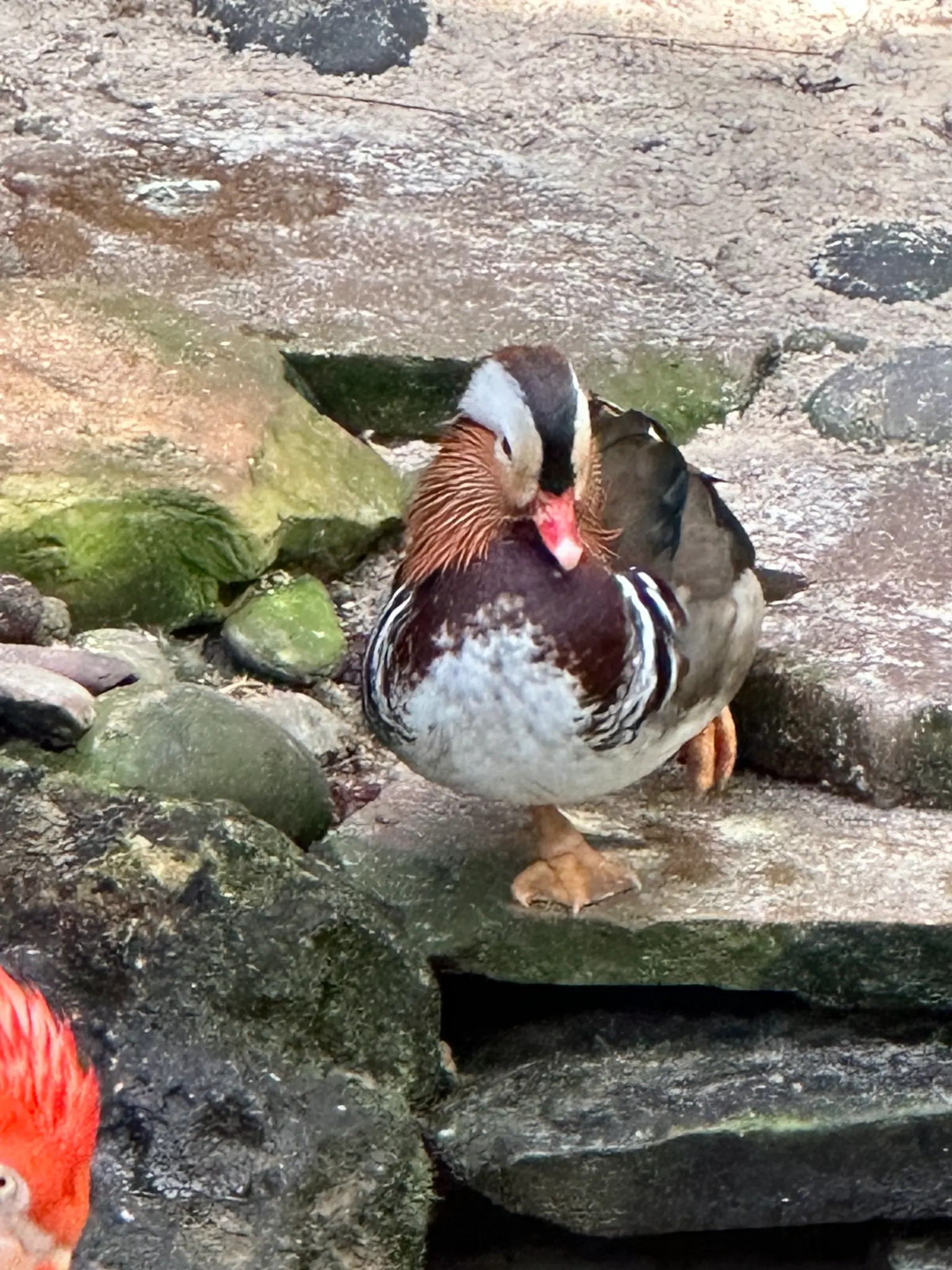
Mandarin Duck (Aix galericulata) — one of the most ornately colored ducks in the world, with chestnut whiskers and a vivid red bill
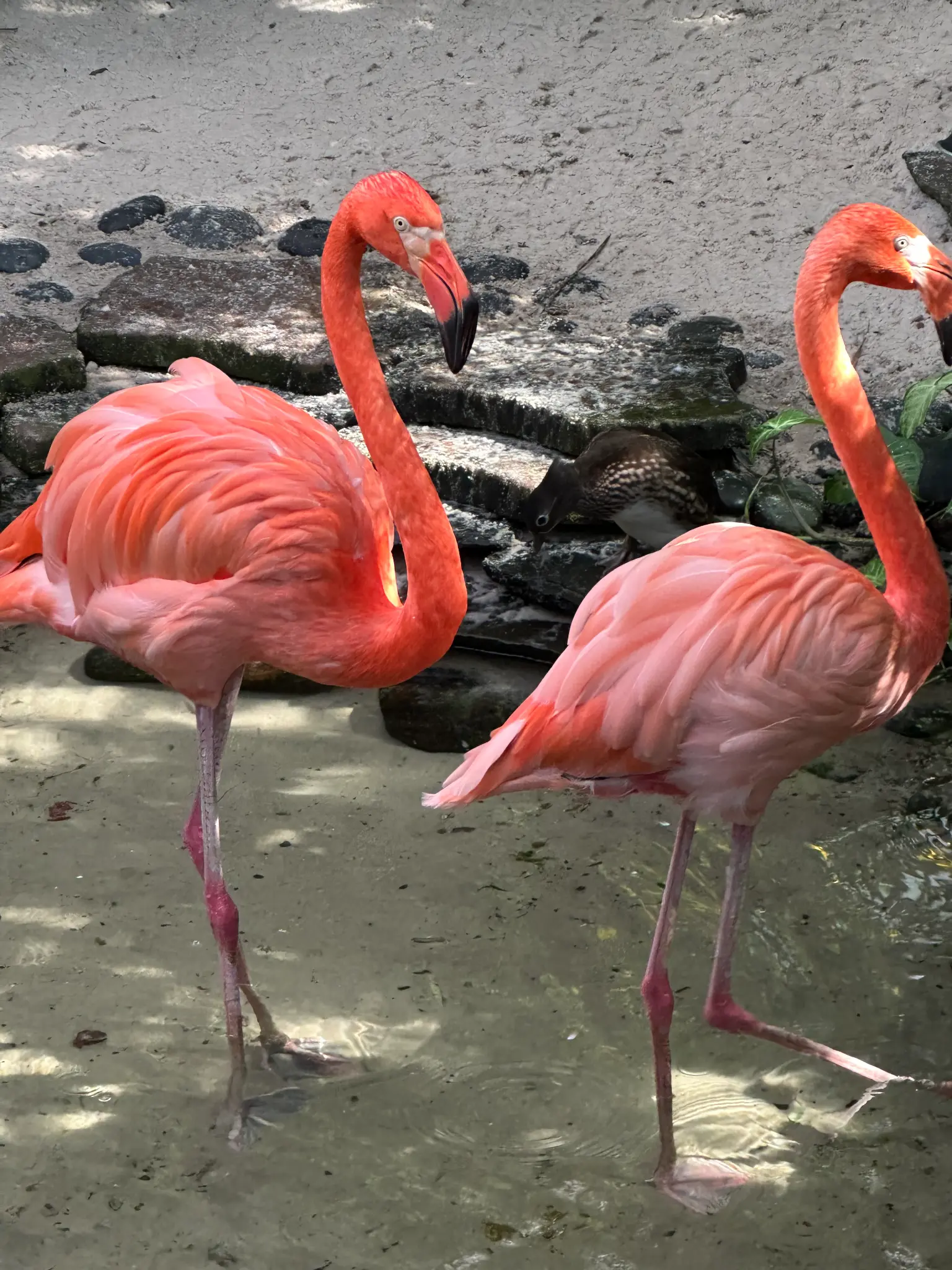
Caribbean Flamingos (Phoenicopterus ruber) wading through the shallows — the most vibrantly coral-pink flamingo species, with a Muscovy Duck resting between them
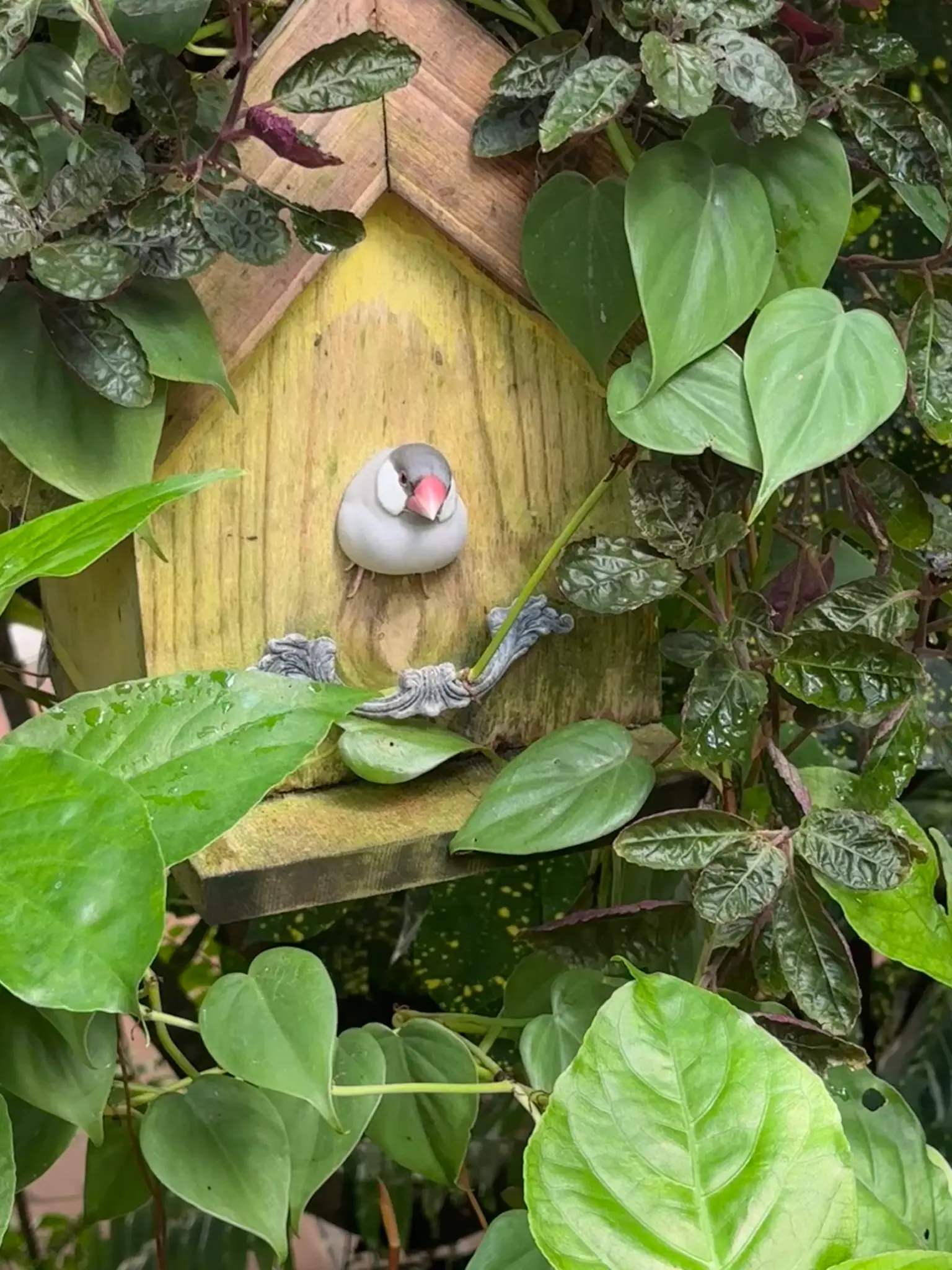
Java Sparrow (Lonchura oryzivora) peeking from its birdhouse — a tiny resident tucked among the tropical vines, with that unmistakable coral-pink bill
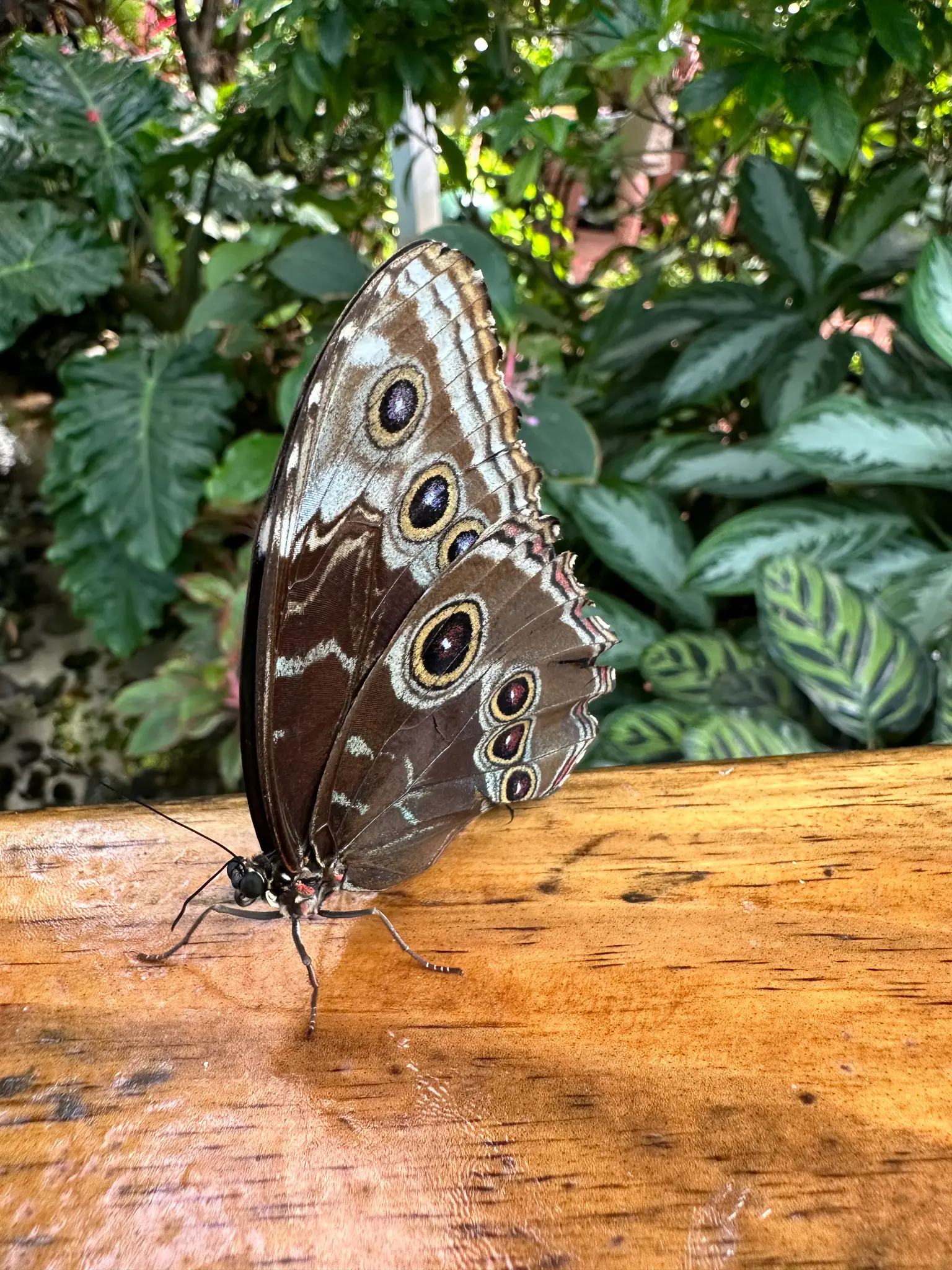
Blue Morpho (Morpho peleides) wings closed — the owl-eye spots on the underside serve as camouflage; open those wings and the iridescent electric blue is breathtaking
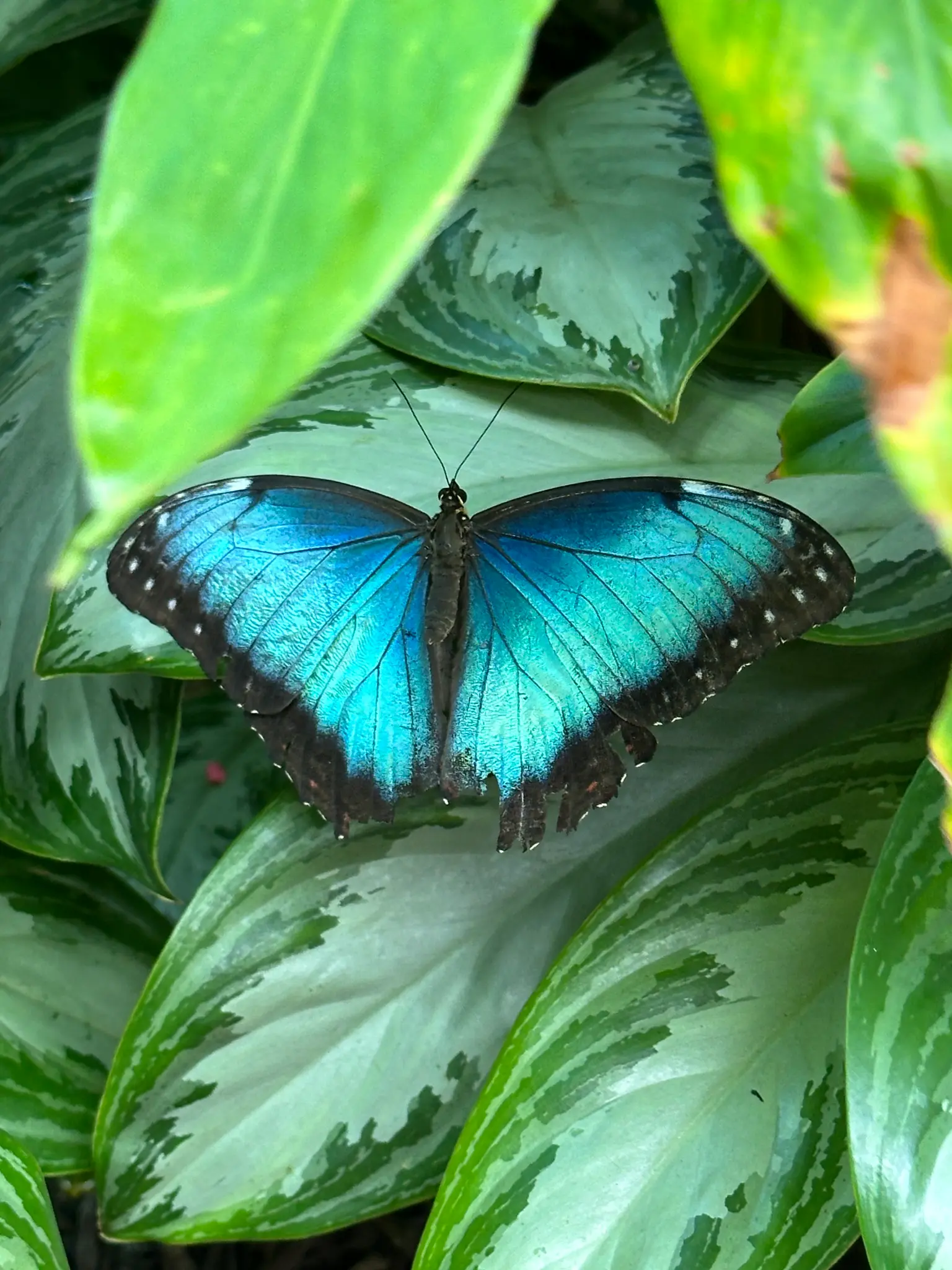
Blue Morpho (Morpho peleides) wings open — that iridescent electric blue is one of nature’s most stunning sights
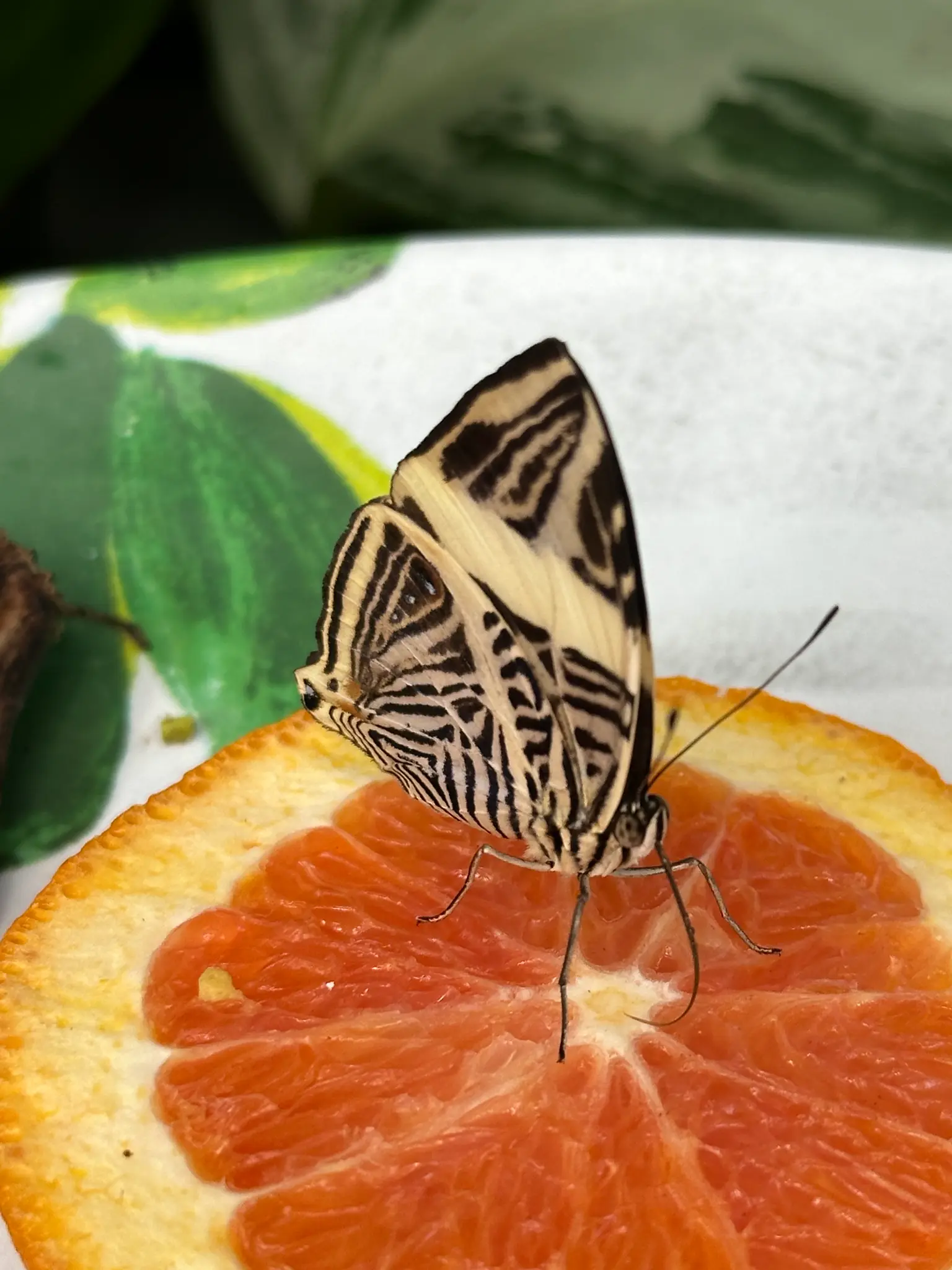
Zebra Mosaic (Colobura dirce) feeding on a grapefruit slice — the bold black-and-white zebra stripes are unmistakable
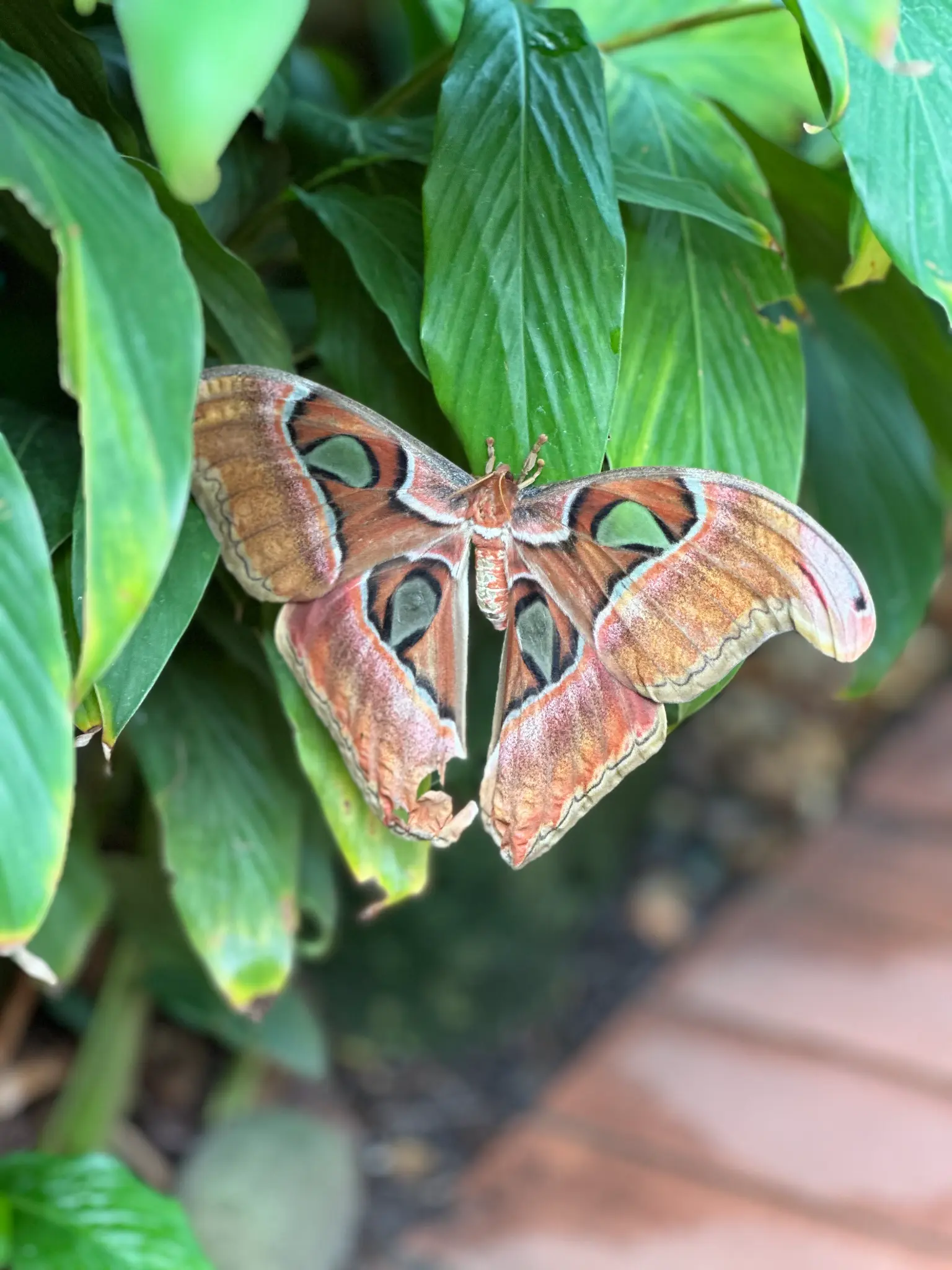
Atlas Moth (Attacus atlas) — one of the largest moths in the world, wings fully spread on tropical foliage
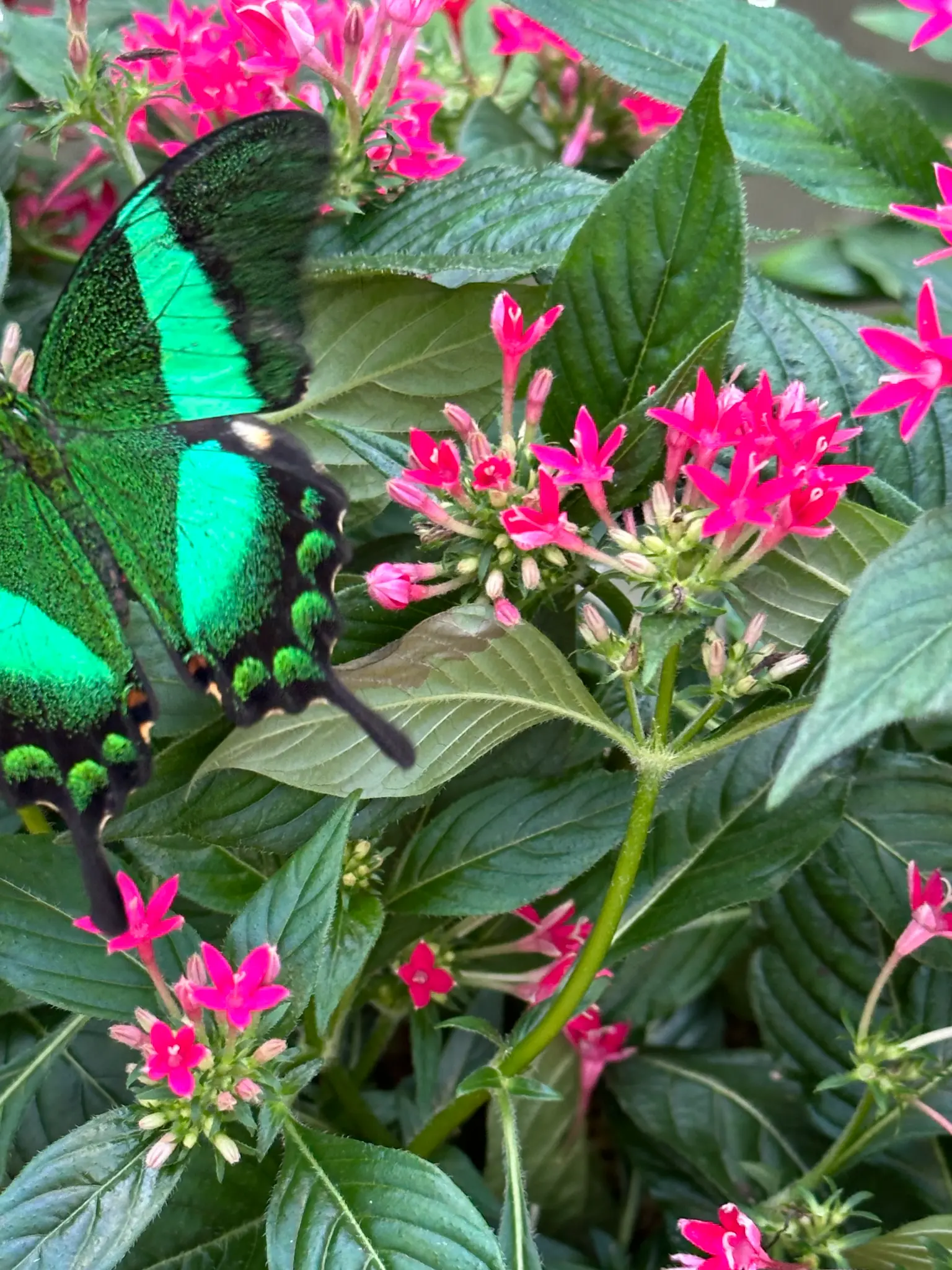
Emerald Swallowtail (Papilio palinurus) feeding on pink pentas — the metallic green and teal shimmer is breathtaking
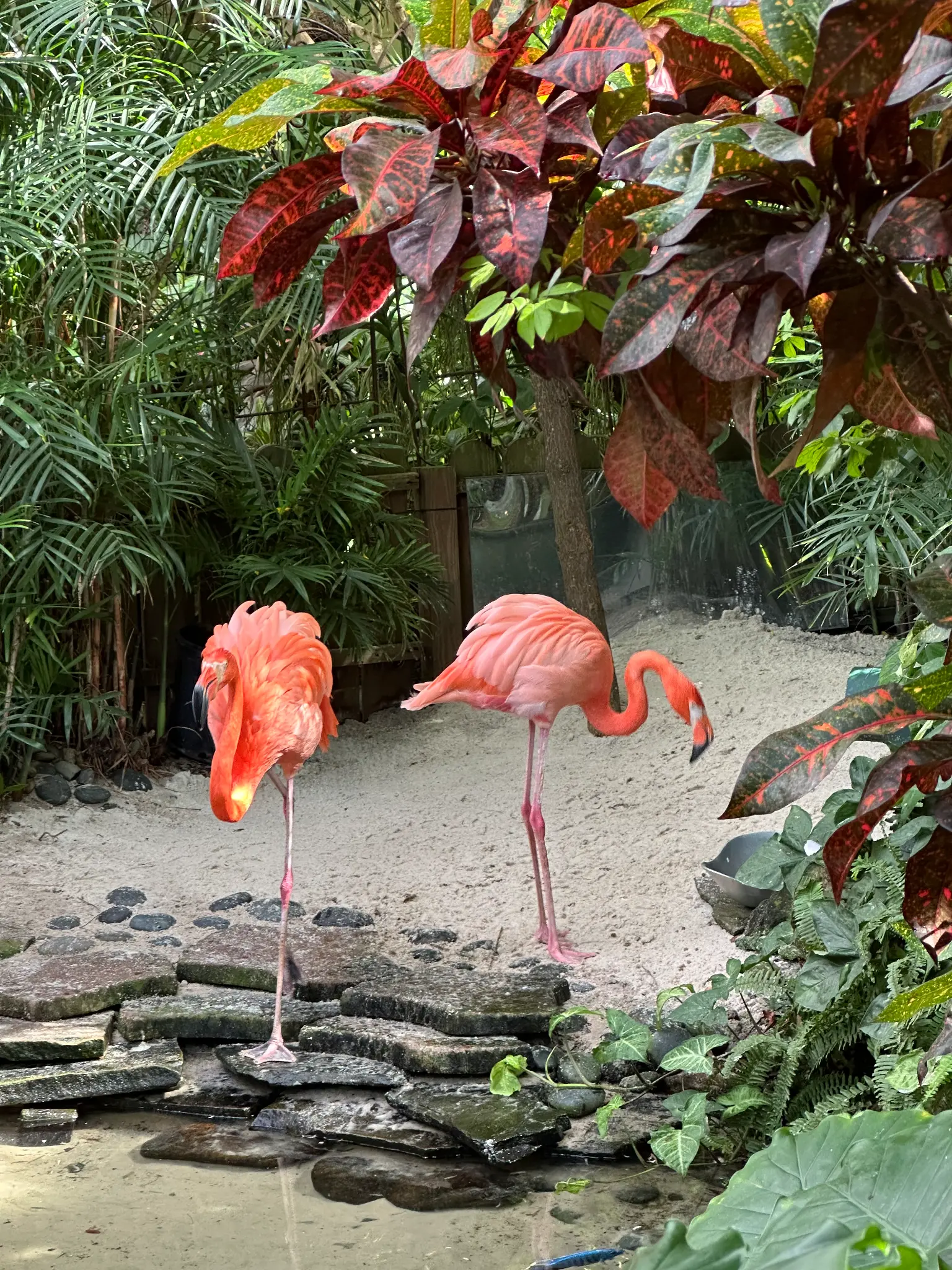
Caribbean Flamingos (Phoenicopterus ruber) on the sandy floor — framed by vivid tropical croton foliage in the conservatory garden
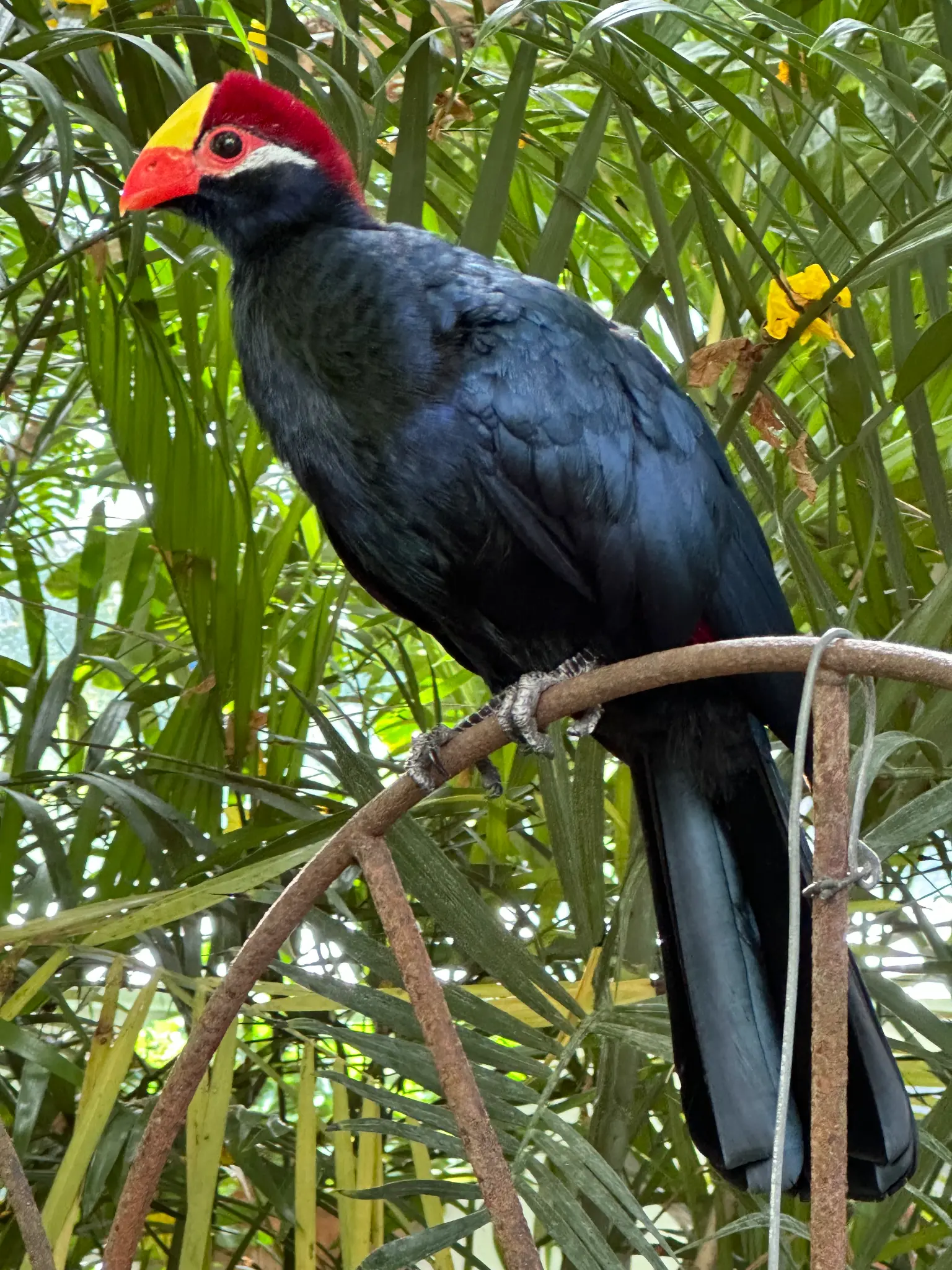
Violet Turaco (Musophaga violacea) perched in the palms — a striking bird with a scarlet crown, yellow bill, and deep blue-black plumage
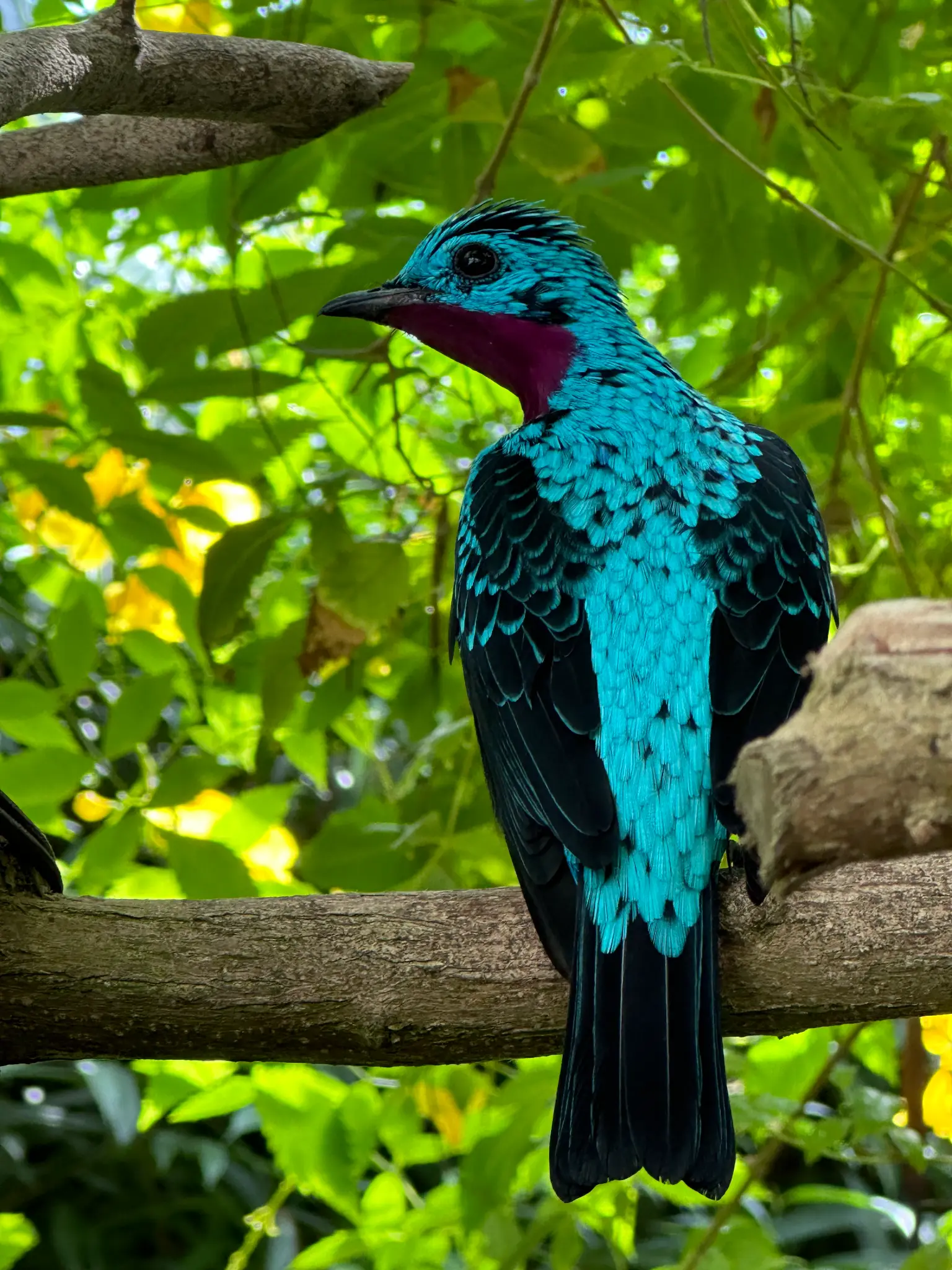
Spangled Cotinga (Cotinga cayana) — electric turquoise feathers and a deep magenta throat patch make this one of the most dazzling birds in the conservatory
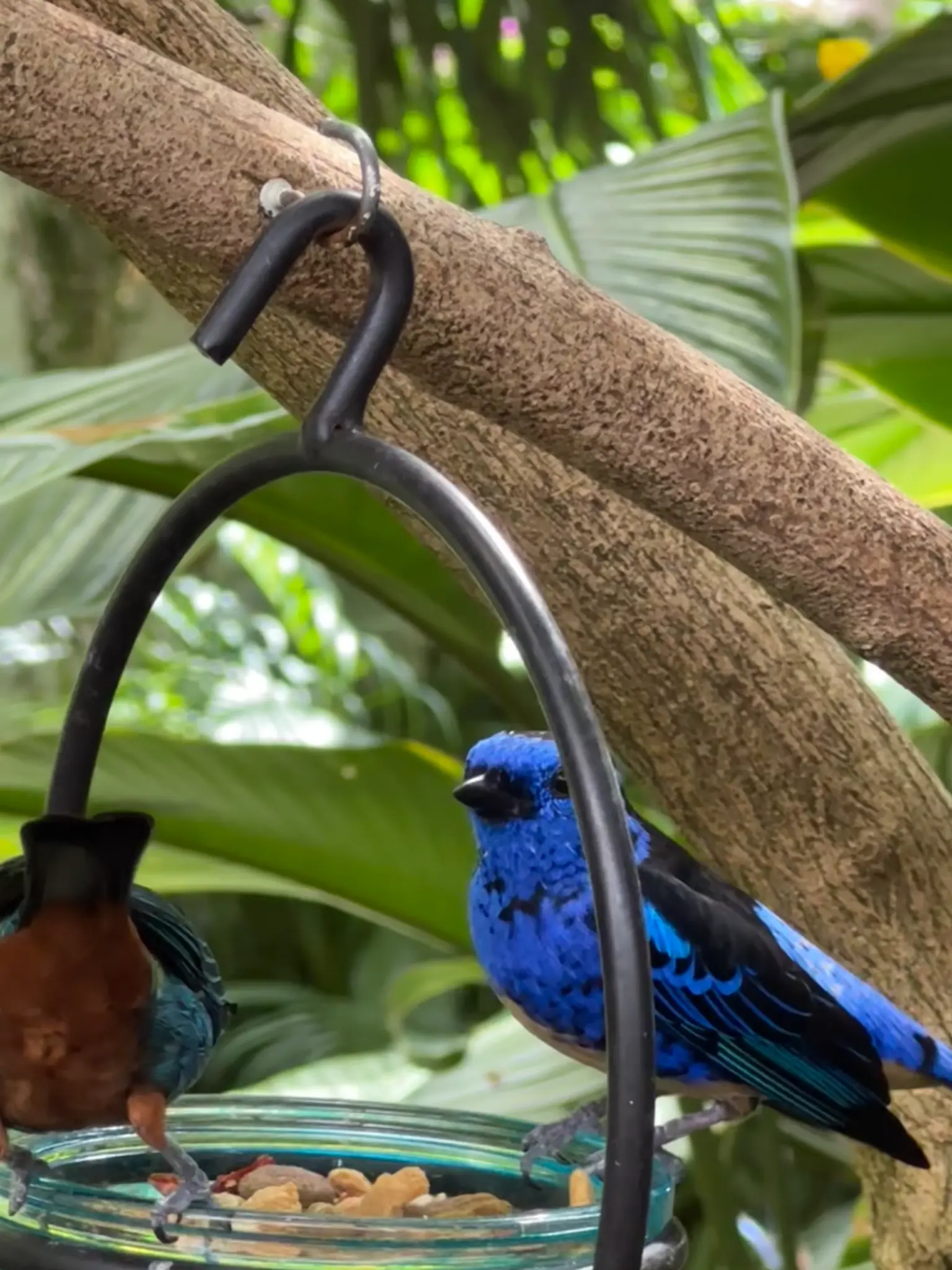
Blue Dacnis (Dacnis cayana) at the feeder — brilliant cobalt blue with black wings, alongside a Green Honeycreeper on the left
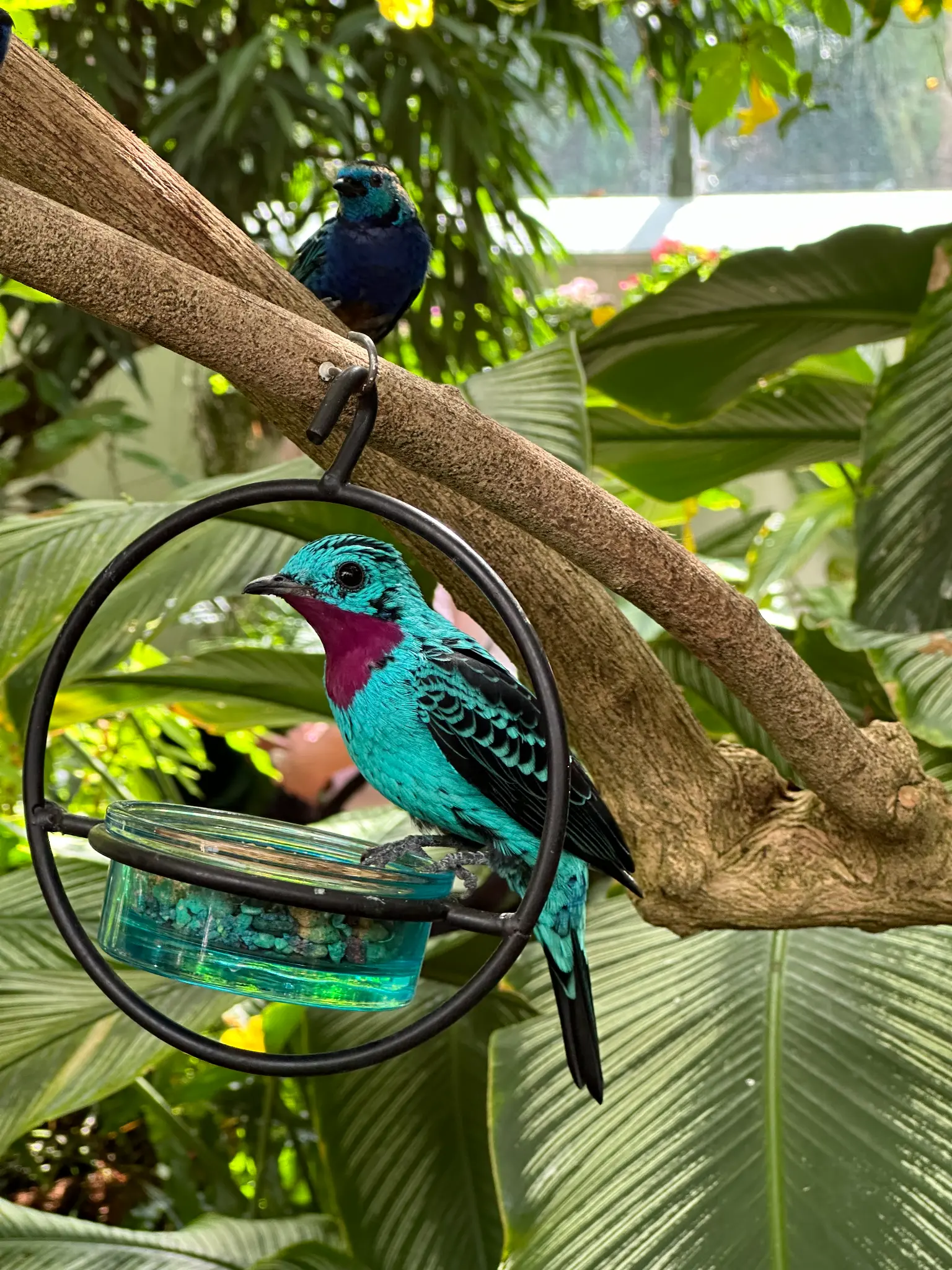
Spangled Cotinga (Cotinga cayana) in the feeder ring with a Blue Dacnis perched above — two jewel-toned birds sharing a moment
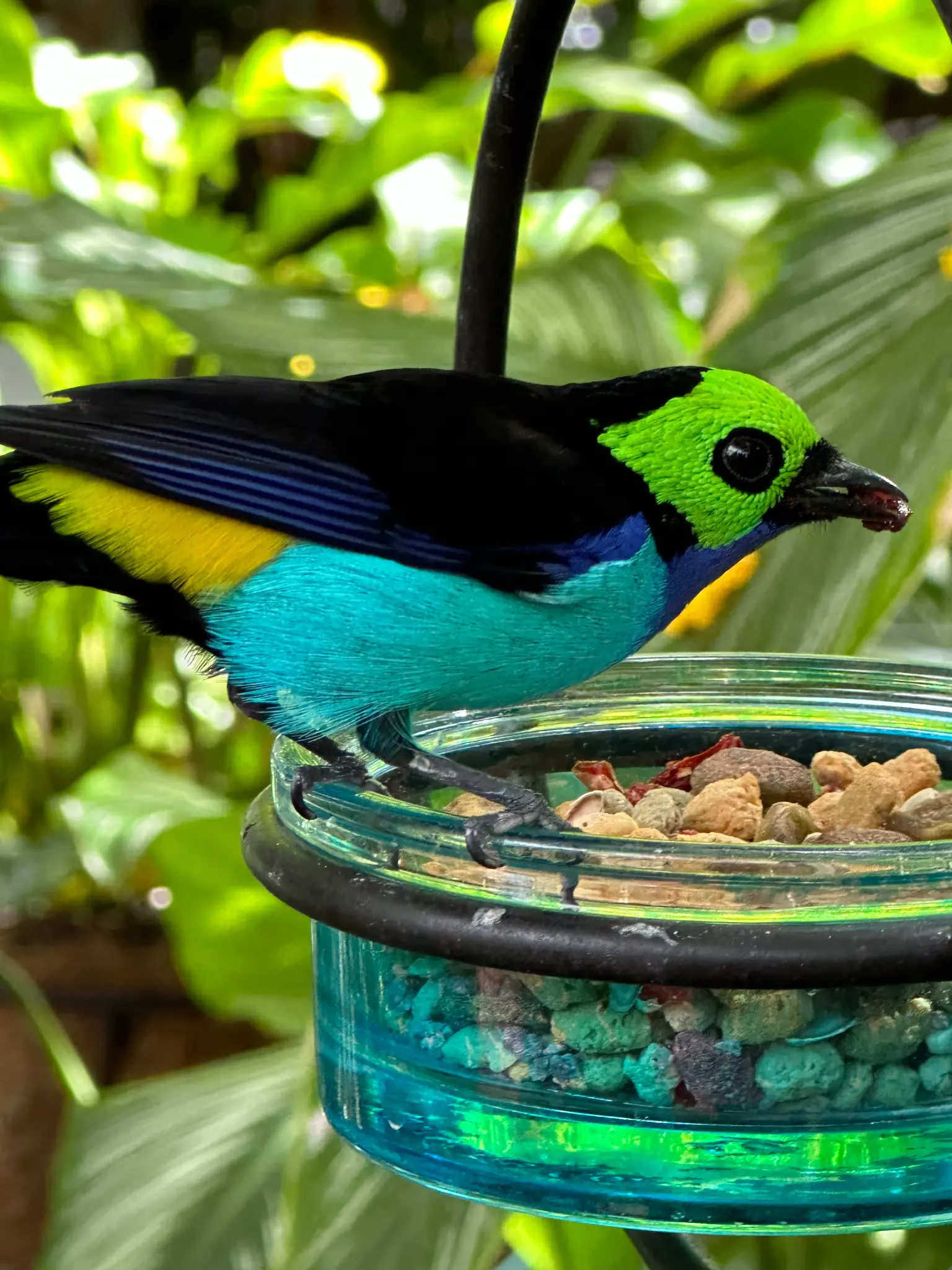
Paradise Tanager (Tangara chilensis) — neon green head, royal blue chest, turquoise belly, and yellow shoulder patch; one of the most colorful birds on earth
More Coming Soon
We are still exploring Key West. More sections — Mallory Square sunsets, the Historic Seaport, Duval Street dining, day trips to the backcountry, and more — are on the way. Check back soon.
Enjoyed this article? Share it.